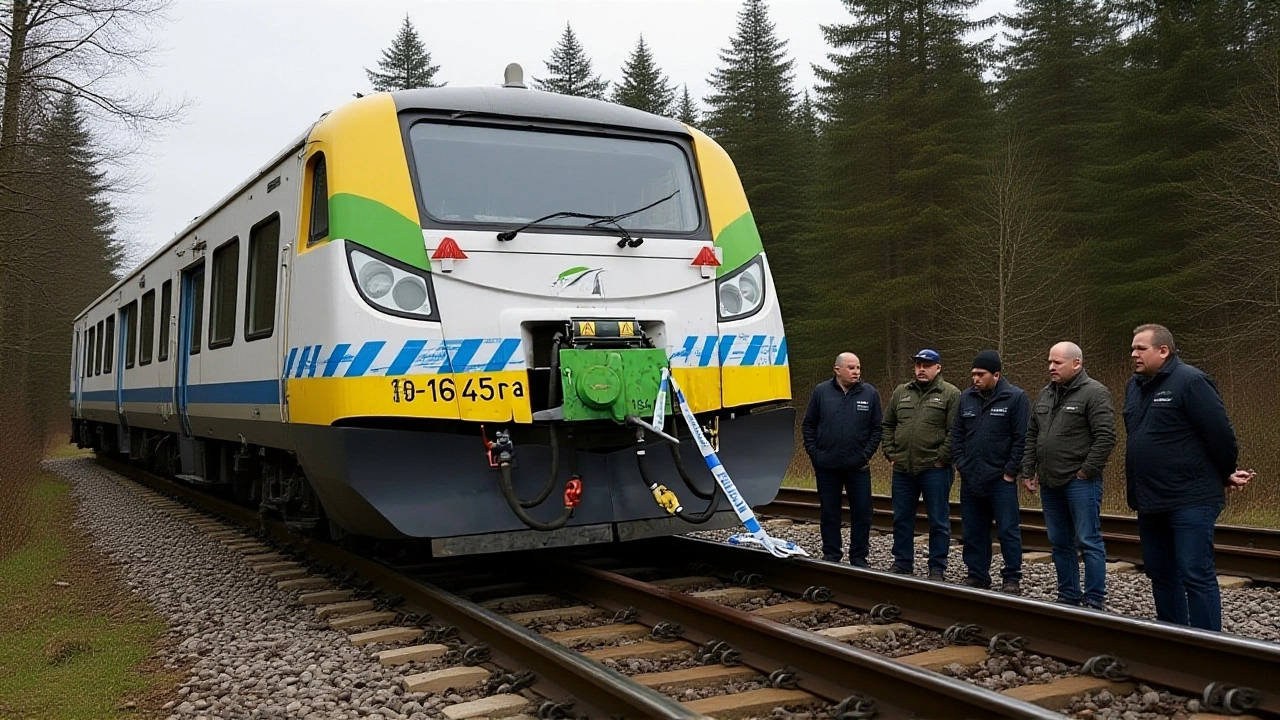
On Monday, November 17, 2025, Prime Minister Donald Tusk delivered a chilling confirmation: a deliberate act of sabotage had torn through the critical railway line linking Warsaw and Lublin. The explosion, planted near the village of Mika in eastern Poland, wasn’t an accident. Forensic teams verified an explosive charge had been used — and worse, investigators found a second blast site closer to Lublin. No one was hurt. But the message was clear: Poland’s lifeline to Ukraine is now a target.
From Suspicion to Confirmation
The incident began Sunday, November 16, when a train driver noticed twisted rails near Mika. By afternoon, Tusk publicly called it "may have been an act of sabotage." But by Monday morning, the tone had hardened. "Unfortunately, the worst fears have been confirmed," Tusk said. The damage wasn’t isolated. Two separate charges. Two locations. A pattern. This wasn’t random vandalism. It was precision. And it targeted infrastructure vital to NATO’s support for Ukraine.
What made this different from past incidents? The scale. The coordination. And the timing. Poland has seen over a dozen suspected sabotage events in 2025 — from gas pipelines to power substations — but never before had a major rail artery been hit with such clear intent. The Warsaw-Lublin rail line carries not just commuters, but tanks, ammunition, medical supplies, and humanitarian aid. A deputy foreign minister, speaking anonymously, called it "the most critical logistical corridor for Ukraine’s eastern front." Disrupt it, and you slow the entire war effort.
Who’s Behind It? The Russian Shadow
There was no need to guess. Within hours of Tusk’s announcement, Bartłomiej Sienkiewicz, former interior minister and now a Civic Coalition (KO) Member of the European Parliament, went on TVN and laid it bare: "It may indicate a new form of hybrid warfare between Russia and Poland." He didn’t mince words. "Not a month goes by without some form of aggression from people recruited by the Russian security services on the territory of not only Poland but the entire European Union." Then came the line that sent shivers through Brussels: "We are truly at war."
Sienkiewicz’s credibility isn’t thin. He led Poland’s internal security apparatus until late 2024. His former subordinate, a figure known only as Duszczyk, was reportedly involved in tracking similar incidents. Sienkiewicz’s comments weren’t speculation — they were a summary of intelligence briefings. The Internal Security Agency (ABW), Poland’s counterintelligence arm, has been tracking Russian operatives planting explosives, tampering with rail switches, and hacking logistics systems since early 2024. This was the next escalation.
The Broader War on Europe’s Infrastructure
This isn’t just about Poland. In June 2025, a similar rail sabotage disrupted supplies to the Baltic states. In August, a pipeline near Gdańsk was breached. In October, a transformer station in western Poland failed — the same day NATO conducted a major resupply exercise to Ukraine. The pattern is unmistakable: Russia is testing how far it can go before NATO responds. And it’s choosing targets that hurt Ukraine without directly firing a shot.
Poland has spent billions fortifying its borders, but its infrastructure remains vulnerable. Rail lines are long, exposed, and often poorly monitored in rural areas. Mika? A quiet village. No cameras. No guards. Just 12 miles of track between fields. Perfect for a sleeper cell. The fact that two charges were placed — one near the start, one near the end — suggests planning over days, maybe weeks. This wasn’t a lone actor. It was a cell.
What’s Next? Investigations, Deterrence, and Fear
The ABW, Poland’s prosecutor’s office, and emergency services are now combing the area for traces of explosives, drones, or surveillance equipment. No suspects have been named. But Tusk made one thing clear: "We will find who did this. And we will respond."
For now, trains still run — on the parallel track. But delays are mounting. Military convoys are being rerouted, adding hours to supply chains. Ukrainian commanders are being told to expect slower deliveries. The human cost? Less visible, but real. Soldiers waiting for spare parts. Hospitals waiting for medicine. Civilians waiting for relief.
The Polish government is now accelerating plans to install motion sensors along 1,200 kilometers of key rail lines. Drones will patrol vulnerable zones. Military police will be embedded with rail crews. But as Sienkiewicz warned, "If they hit one line, they’ll hit another. And another. Until we treat this like a war — not a series of isolated incidents."
Why This Matters to Everyone
Poland is NATO’s eastern shield. If Russia can disable its supply routes with impunity, what stops them from targeting Germany’s rail hubs? Belgium’s ports? The Netherlands’ energy grid? This sabotage isn’t just an attack on Poland. It’s a stress test for the entire alliance. And so far, the response has been reactive — not preventive.
What happened near Mika wasn’t just an explosion. It was a warning. A signal. A declaration that the battlefield has moved from Kyiv’s suburbs to the quiet countryside of eastern Poland. And if the West doesn’t act, it won’t be the last one.
Frequently Asked Questions
How does this sabotage affect Ukraine’s war effort?
The Warsaw-Lublin line is one of the shortest and most efficient routes for delivering military aid from NATO stockpiles to Ukraine’s eastern front. Even a 24-hour disruption can delay hundreds of tons of ammunition, fuel, and medical supplies. With rail delays now stretching to 48 hours on alternate routes, Ukrainian units are reporting slower resupply cycles — a critical disadvantage in active combat zones.
Why hasn’t Poland shut down the entire rail line?
Shutting down the entire corridor would cripple both civilian travel and humanitarian aid. Instead, Poland is using the parallel track — though it’s slower and less reliable. Military convoys are being prioritized, but passenger services are delayed by up to three hours. The goal is to maintain operational continuity while forcing saboteurs to expend more resources to strike again.
What evidence points to Russia?
Polish intelligence has documented 14 similar sabotage incidents since January 2025, all involving the same explosive types, delivery methods (often via drone or vehicle), and timing (coinciding with NATO aid shipments). Forensic analysis of residues from the Mika blast matches materials linked to Russian GRU operations in 2023. Sienkiewicz’s intelligence network also flagged a known Russian operative near the border days before the attack.
Has Russia officially commented on this?
No. The Kremlin has remained silent, as it has with all previous sabotage claims. But in 2024, Russian state media openly praised "anti-NATO resistance" in Poland. In 2025, the Russian Foreign Ministry called Poland’s accusations "baseless propaganda." The pattern is consistent: deny, distract, and wait for the world to move on — until the next explosion.
Could this lead to NATO military action?
Not directly — Article 5 doesn’t cover infrastructure sabotage unless it’s an armed attack. But NATO is now reviewing its rules of engagement for hybrid warfare. Poland has requested increased surveillance assets along its eastern border, and the U.S. has already deployed additional cyber teams to help track Russian operatives. A coordinated response is coming — but it will be intelligence-driven, not military.
What’s the long-term impact on Poland’s security policy?
Poland is fast-tracking a €2.3 billion infrastructure defense program, including AI-powered monitoring of rail lines, armored rail guards, and joint patrols with Ukrainian border units. The government is also pushing for EU-wide critical infrastructure protection standards. This attack has shifted Poland’s defense doctrine from deterrence to active defense — and it’s no longer just a national issue. It’s a European one.